
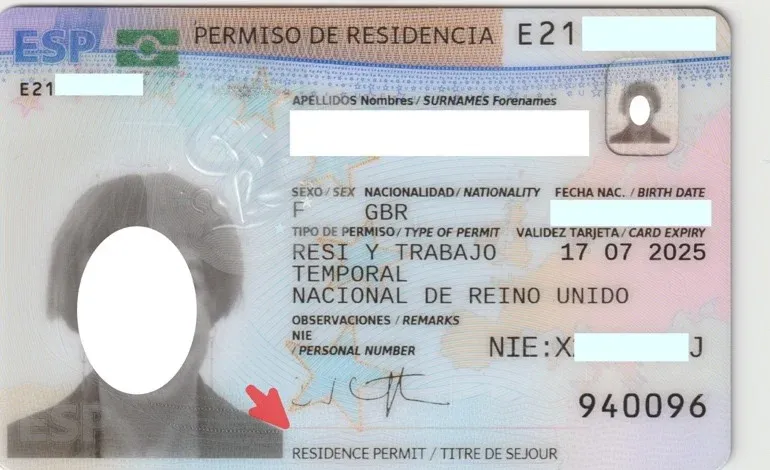
If you searched TIE card Spain and landed here, you want a sequence, not a slogan. The plastic card is not the permission. The permission is the visa or residence authorisation. The TIE is the card the police issue afterwards so that authorisation can be shown on the street, at a bank and at a border.
This page is for someone moving to Barcelona, or already here, who has been told to “get a TIE” and is mixing it up with an NIE, a green EU paper, or a property purchase. It is general information on Spanish documentation. It is not immigration legal advice, and it does not tell you which visa to apply for.
The card is not the permission
The Interior Ministry is blunt about what the card is. The TIE is the unique and exclusive document meant to document foreign nationals in a situation of legal stay in Spain (Interior, TIE). It records that an authorisation or a recognised right to remain for more than six months has been granted. It is personal and non-transferable. You keep it. You carry it. You show it when an authority asks.
It is not a Spanish identity card. Interior says identity still comes from the passport or equivalent issued by the country of origin. The TIE documents the administrative situation. That distinction matters when a bank, a notary or an employer asks for “your ID”. Take both.
Organic Law 4/2000, article 4 is the statutory line. All foreigners to whom a visa or an authorisation to remain in Spain for a period of more than six months has been issued will obtain the foreigner identity card, which they must apply for in person within one month of entering Spain or of the authorisation being granted, respectively. Holders of a seasonal residence and work visa are excepted from that obligation. The same article lets the regulation add cases for stays of six months or less. Do not invent those cases from a forum post.
The regulation that now develops the law is Royal Decree 1155/2024. The regulation approved by Royal Decree 1155/2024 entered into force on 20 May 2025. It repealed the 2011 regulation. Police TIE pages cite both the organic law and this decree. If an old checklist still talks about Royal Decree 557/2011 as if it were current, throw the checklist away.
Barcelona City Council’s welcome desk says the same thing in plainer English: the card is obligatory for foreign nationals issued a visa or residence permit for more than six months, or who have obtained long-term residence, and it is a priority formality because fingerprints are taken in person (Barcelona International Welcome, TIE). The council also warns that not having a valid card, even with a visa, can lead to a penalty. Interior points the sanctioning regime back to Organic Law 4/2000. Neither page publishes a tariff of fines on the TIE explainer. If you missed the month, speak to a lawyer. Do not guess the fine from a blog.
NIE, TIE, padrón and the EU paper are four files
Search results collapse four Spanish objects into one acronym. They are not one object.
The NIE is a personal, unique and exclusive sequential number that identifies a foreign national (Interior, foreign-national documentation). It appears on later Spanish documents. It is assigned of office in many residence and visa files. It is requested on form EX-15 when the reason is an economic, professional or social interest, including buying a home. That assignment can be made in Spain, through a legally authorised representative, or through the Spanish consulate of the applicant’s district of residence. The TIE appointment is not that procedure.
The TIE is the card. The number is printed on it. Losing the card does not create a new number.
Padrón is the municipal register of inhabitants. Barcelona’s TIE checklist usually asks for proof of registration in the city, except for profiles under Law 14/2013 handled by the Large Companies Unit (Barcelona International Welcome, TIE). Padrón is a local-council file. It is not a residence permit.
EU, EEA and Swiss nationals who will stay more than three months do not collect a TIE. Citizens of an EU Member State or of another State party to the EEA Agreement who are going to reside in Spain for more than three months are obliged to apply in person for registration in the Central Register of Foreign Nationals (Police, EU registration certificate). The application is due within three months of entering Spain. The office issues a registration certificate at once, with name, nationality, address, NIE and the date of registration. The form is EX-18. Identity during the stay remains the national ID or passport. A non-EU family member of an EU citizen follows a different card, on form EX-19, not the general-regime EX-17.
If you are a British national covered by the Withdrawal Agreement, do not copy a 2018 “green A4” walkthrough and do not copy a US-citizen EX-17 pack either. Orden PJC/617/2025 puts the Withdrawal Agreement TIE on the same fee line as the EU certificate. The competent police unit still tells you which form and which cita-previa label to use. Ask that unit. This page will not invent the label.
The Barcelona administrative-setup checklist is the place to keep padrón, NIE, TIE, EU registration and the health card as separate rows. Mixing them on one sticky note is how people book the wrong appointment.
Who actually has to apply
Start with nationality and the document you already hold, not with a nationality stereotype.
Spanish nationals do not hold a TIE. EU, EEA and Swiss nationals on the free-movement route register. Third-country nationals with a visa or authorisation for more than six months apply for the card, unless the seasonal-work exception in article 4.2 applies. Long-term residence, including EU long-term residence, is also documented on a TIE.
Interior lists the usual triggers: a first visa or authorisation for more than six months; renewal of that authorisation; a change of situation or of the data printed on the card; theft, loss, destruction or a card that can no longer be used (Interior, TIE). Police split the work across several procedures. The ordinary initial or renewal card for residence or residence-and-work is one. Student cards, long-term cards and EU-family cards are listed as separate trámites on the same Police extranjería index. Booking “any TIE slot” is how files bounce.
Law 14/2013 profiles (investors, entrepreneurs, highly qualified professionals, researchers, intra-corporate transferees, remote workers and listed audiovisual or cultural profiles, plus their family members) are not on the ordinary EX-17 path. Barcelona’s welcome page sends those files to form MI-TIE and to a different cita-previa label, the one for cards whose authorisation is resolved by the Directorate-General for Migration (Barcelona International Welcome, TIE). Spain’s property-based Golden Visa route ended on 3 April 2025 (ministry notice). A Barcelona purchase is not that former visa. If someone is still on a Law 14/2013 authorisation that exists after that date, they still need the card that documents the authorisation they actually hold. Do not treat a deed as a substitute.
Minors attend with a legal representative who brings original identity documents, or with a person empowered by that representative (Interior, TIE). Barcelona adds that children under five do not have fingerprints taken, but they still have to appear for the application. Some stations let a parent collect the finished card without bringing the child back. That is a station practice. Confirm it on the appointment sheet.
A family-reunification file is not a group appointment. Barcelona says the family member must bring their original card, and if visas were requested together the holder of the visa or permit must be present at each family member’s slot. One adult cannot “do everyone” on a single cita.
The one-month clock is real, and it is not one clock
The organic-law default is one month from entry or from grant. The regulation repeats a one-month TIE request on many routes, with small differences that matter if you are the person holding the resolution.
On a non-lucrative residence granted from abroad, article 63.5 of Royal Decree 1155/2024 says the holder must apply for the corresponding TIE in person within one month of entering Spain. On a long-stay study authorisation of more than six months, article 54.9 says the foreign national must apply in person at the competent police station within one month of the authorisation being granted. On a renewal of non-lucrative residence, article 64.9 says the holder must apply for the new card within one month of notification of the renewal.
Interior’s TIE page adds the social-security fork. You apply in person within one month of entering Spain, or of the authorisation being granted, or of it taking effect, depending, where relevant, on registration in the corresponding social-security scheme (Interior, TIE). Barcelona’s welcome page tells workers to obtain a social-security number and registration after arrival and before starting work, and tells students they can skip that step. Interior also says that where the effectiveness of the authorisation is conditioned on social-security registration, police check that alta of their own motion before issuing the card. Do not skip the alta because a friend “went straight to fingerprints”.
Missing the month is not a published automatic cancellation of the underlying authorisation. It is a missed documentation duty with a sanctioning regime behind it, and it leaves you without the card that Barcelona says attests legal stay. Appointments in Barcelona are in high demand. The welcome desk’s practical advice is to try for a slot as soon as you arrive, because the first attempt often fails (Barcelona International Welcome, TIE). A screenshot of an unsuccessful search is not a filing. Keep trying, and keep the visa, the entry stamp and the resolution with you.
If the card is later lost, destroyed or made unusable, Interior says you must apply immediately for another document with the same validity as the one it replaces. That replacement is not treated as a renewal. If you apply during the renewal window, the two procedures are handled together.
What you take to the appointment
Police’s current TIE procedure for an initial or renewed residence or residence-and-work card is in person. The application together with the documentation that must accompany it must be presented at any Immigration Office or corresponding Police Station (Police, TIE). The forms they name are the EX-17 TIE application and proof of payment of model 790 code 012. Payment can be made at banks, savings banks and credit cooperatives, without needing an account there, by presenting the payment document.
That is thinner than the document list you actually carry. Interior and Barcelona fill it in. Bring originals. They are checked and returned.
For a first card, Interior asks for:
- the official application, completed and signed
- passport or travel document with the entry stamp or border-control mark; if there is no stamp, a passport in force plus the entry declaration that should have been made at a police station or extranjería within 72 hours of entering; or, where relevant, a cédula de inscripción
- a recent colour photo, white background, carnet size
- the visa, where there is one
- the grant resolution in the listed cases (including Law 14/2013 authorisations, cross-border workers, certain SME minors, and residence or stay granted after a court appeal)
- proof the fee has been paid
- proof of social-security affiliation or registration, where relevant
Barcelona adds the appointment printout and, for ordinary profiles, municipal registration. Public documents issued abroad still need the apostille or diplomatic legalisation and a sworn Spanish translation, unless they are multilingual standard EU forms (Barcelona International Welcome, TIE).
For a lost or unusable card: the police report or the damaged card. For a change of data or situation: the documents that prove the change. For a change of address: a padrón certificate less than three months old.
Do not treat a private “TIE kit” PDF as the list. The receiving station can ask for a copy you did not expect. The EX-17 you downloaded in 2023 may not be the current file. Use the police link on the day you book.
A representative can help you prepare the file. Fingerprints are taken from the person named on the card. Interior and Barcelona both say the holder applies in person. Paying a gestor does not replace your body at the counter.
How to book in Barcelona
There is no walk-in window that reliably issues a TIE in this city. Barcelona’s instructions are to book through the government cita previa site, choose Barcelona, then pick the National Police procedure that matches the file (Barcelona International Welcome, TIE). The labels the council currently quotes are:
- “POLICIA-TOMA DE HUELLAS (EXPEDICIÓN DE TARJETA) Y RENOVACIÓN DE TARJETA DE LARGA DURACIÓN” for students and self-employed workers on the general path
- “POLICIA-EXPEDICIÓN DE TARJETAS CUYA AUTORIZACIÓN RESUELVE LA DIRECCIÓN GENERAL DE MIGRACIONES” for Law 14/2013 / UGE profiles
Those strings change. Read the on-screen notes. The office list and opening hours sit on the Police station locator. Immigration office addresses are on the Government Delegation extranjería page. A gestor quoting a private WhatsApp “slot” is not an official appointment.
Pay the 790/012 fee before you go. The appointment will ask for the stamped receipt. Choose the fee line that matches the card you are actually requesting. The first temporary card is not the long-term card. The Withdrawal Agreement line is not the ordinary first-grant line.
Go with the passport, the copies, the photo, the resolution or visa, the padrón if it applies, and the appointment confirmation. At the end of a successful fingerprint appointment Barcelona says you receive a receipt to collect the card, with the collection place printed on it. Children under five still attend the application even though they are not printed.
What it costs on form 790 code 012
The old version of this article quoted a private site and a band of €10 to €20, and it misnamed the form as 170/012. The live instrument is Orden PJC/617/2025, in force from 16 June 2025, which repealed Orden PRE/1803/2011. Annex heading 4 is the TIE and EU-certificate block.
TIE that documents the first grant of a temporary residence authorisation, of stay or for cross-border workers: €16.08. The renewal of those cards is €19.30. A TIE that documents long-term residence or EU long-term residence is €21.87. A TIE for temporary residence of family members of Spanish nationals is €12. The EU registration certificate, the residence card of a family member of an EU citizen, and the TIE linked to the Withdrawal Agreement for British nationals and their family members is also €12. A TIE documenting residence of minors in public care is €0. A TIE for listed victims of gender-based violence, sexual violence or trafficking is €16.08.
Those figures are the police card fees. They are not the fee for the underlying residence authorisation, which uses other 790 codes. They are not a gestor invoice. They are not the NIE-assignment fee, which the same order sets at €9.84 under heading 5.12. Article 1.3 of the order says TIE, EU-certificate and related card fees are in any case equivalent to what Spanish nationals pay for a DNI. Article 1.2 says the amounts can move with each year’s state budget law. If you are reading this after a new budget, open the BOE text again.
Barcelona’s welcome page still summarises long-term at €21.87 and other TIE types as a €16 to €20 range. Use the BOE row that matches your card. The 790 generator prints the amount once you pick the fact.
A return authorisation, if you need to travel while a card is being renewed or replaced, is a separate document. Article 5 of Royal Decree 1155/2024 allows one, including where a TIE in force was stolen, lost, destroyed or made unusable and a duplicate has been requested. The order prices that authorisation at €10.72. It is not a TIE.
After fingerprints: collection and validity
Barcelona says collection takes approximately forty-five (45) days (Barcelona International Welcome, TIE). The same page talks about a receipt that points to collection in about forty days. Treat both as local estimates, not a statutory service standard. Police’s procedure page does not publish a national countdown. Bring the passport and the collection slip. You have to show that you are the person the card is for.
The foreigner identity card will have the same period of validity as the authorisation or the recognition of the right that justifies its issuance (Interior, TIE; Barcelona International Welcome, TIE). When the authorisation dies, the card dies. Interior says holders must hand the expired or replaced card in at the police station for their place of residence. A change of situation, including a renewal, produces a new card with the validity of the new resolution.
Carry the card. Interior repeats the duty to exhibit it when required, without prejudice to proving identity with the passport. Report a change of nationality, habitual address or family circumstances that affect the printed data within one month, in person, at the police station or extranjería police unit for the place of residence. If police require the change, the window is fifteen days from the request.
A valid TIE can also be the document that lets you re-enter Spain without a visa, together with the other cases in article 7.3 of Royal Decree 1155/2024, provided the Spanish authorisation is still in force. That is a border rule, not a reason to travel on an expired card and hope.
Buying a home does not produce a TIE
Foreign buyers in Barcelona need an NIE for the deed, the tax filing and usually the bank. They do not need a TIE to buy. Barcelona City Council treats a property purchase as a reason to request the number without processing a TIE or an EU registration certificate (Barcelona International Welcome, NIE). The NIE for a Barcelona purchase is the process page for that number. Can foreigners buy a property in Barcelona? and buying as a foreigner in 2026 are the purchase maps. A TIE on the table does not replace the NIE, and an NIE on a white certificate does not replace a TIE if you are actually residing under a visa.
Spain’s property-based Golden Visa route ended on 3 April 2025. Mention it only as history. A notary will not print a residence card on the deed. If relocation is the real project, the residence route has to exist before the TIE appointment exists. Relocation services can help sequence housing, school search and a document checklist. They cannot invent a visa.
If you already live here, keep the TIE current the same way you would keep a DNI current: before it expires, with the right form, with the fee paid, in person. If you only own a flat and live elsewhere, you still have the NIE. You do not collect a TIE “because of the property”.
What this page will not do
It will not choose your visa, invent a fine, or recycle a 2022 fee table. An electronic form is not a fingerprint appointment. A relocation agency cannot book the cita.
Use the police procedure page, Interior’s TIE page, the current EX-17, the 790/012 generator and the cita previa site. If the file involves a refusal, a late filing, a change of status or a minor, take the papers to a qualified immigration lawyer. Contact Lasose if the practical problem is a home, a rental or a first-month dossier in Barcelona. Bring the resolution you hold, not a screenshot of this article.
The next useful step is narrow. Open the Police TIE procedure, download today’s EX-17, generate 790/012 for the exact card, and try the Barcelona slot while the one-month window is still open. The permission is already on the visa or the resolution. The card is the part you still have to collect.
Frequently Asked Questions
Is a TIE the same as an NIE?
No. The NIE is a personal identification number. The TIE is the plastic card that documents an authorisation or visa to stay more than six months. You can hold an NIE for a property purchase without holding a TIE.
Do EU citizens need a TIE card in Spain?
Usually no. An EU, EEA or Swiss national staying more than three months registers and receives a registration certificate, not a TIE. A non-EU family member of an EU citizen follows a separate residence-card route. A British beneficiary of the Withdrawal Agreement follows the dedicated TIE line, not the ordinary third-country EX-17 path.
How long do I have to apply for a TIE after arriving?
Organic Law 4/2000 requires a personal application within one month of entering Spain or of the authorisation being granted. On some work routes the clock is tied to when the authorisation takes effect after social-security registration. Missing the card deadline is a documentation problem. It is not, by itself, a published rule that the residence right is cancelled.
How much does a TIE card cost in 2026?
From 16 June 2025, Orden PJC/617/2025 sets €16.08 for a first temporary-residence, stay or cross-border TIE, €19.30 for a renewal of those cards, €21.87 for long-term or EU long-term, and €12 for the EU registration certificate, an EU-family card or a Withdrawal Agreement TIE. Pay on model 790 code 012. The visa or residence-authorisation fee is separate.
Can Lasose book my TIE appointment?
No. Lasose can prepare a dated document checklist and point you to the official cita previa and police pages. We do not request, book or reserve official appointments, and this page is not immigration legal advice. Take the current official instructions and your own resolution to a qualified lawyer if the file is unusual.