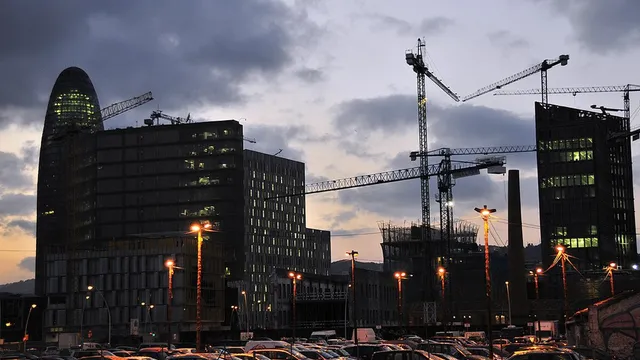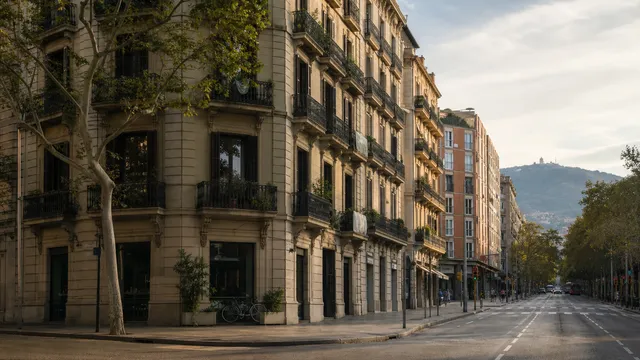
For a home you will occupy every day, Dreta is usually the strongest fit when centrality, architectural character and a short walk into the city centre justify accepting less space or more street activity. Antiga Esquerra suits a buyer who wants much of that central access with a more residential search and a better chance of balancing room size, light and calm. Nova Esquerra often wins when usable floor area, a simpler route towards Barcelona Sants and a less ceremonial daily routine matter more than a prestigious address.
That is a starting answer, not a ranking. The wrong flat in the “right” neighbourhood remains the wrong home. In Eixample, two apartments one block apart can have different light, noise and outlook because one faces a traffic corridor and the other a courtyard. The floor, orientation, windows, lift, layout and state of the whole building can reverse the apparent neighbourhood advantage.
This guide is for a buyer choosing a main home. It compares La Dreta de l’Eixample, L’Antiga Esquerra de l’Eixample and La Nova Esquerra de l’Eixample as separate places, then brings the decision back to the street and apartment.
Choose the weekday before you choose the neighbourhood
A viewing is often scheduled when the flat looks its best. Your life will not be. Start with an ordinary Tuesday and write down the journeys that will repeat: front door to desk, front door to Barcelona Sants, the food shop on the way home, an evening appointment, a late return, and any journey made with luggage or limited mobility.
Use addresses rather than neighbourhood pins. TMB’s journey planner calculates options from an entered origin and destination, can use a chosen departure or arrival time, and lets the user prefer less walking or fewer changes. Check those settings: a route that looks quick on a metro diagram may include a long walk at either end or an interchange you would rather avoid twice a day.
Run the comparison in the TMB journey planner.
Read the network map literally. On L4, Passeig de Gràcia, Girona and Verdaguer appear in sequence. On L5, Sants Estació, Entença, Hospital Clínic, Diagonal and Verdaguer appear in sequence. L1 includes Rocafort, Urgell, Universitat and Catalunya (TMB metro map 2026). It cannot tell you which station is practical from a particular front door.
Use three timed tests for each serious candidate:
- Search the morning route at the time you would actually leave, including the walk from the front door.
- Search the return at the time you normally finish. Optimising for fewer changes may produce a different answer from optimising for speed.
- Walk the route once. Note crossings, pavement width, station entrances, gradients, shade and the final block after dark.
If Barcelona Sants is the repeated destination, compare Nova Esquerra addresses first because Sants Estació and Entença are consecutive L5 stations; Hospital Clínic and Verdaguer lie farther along the same line. Use that only to decide where to test first. It gives no door-to-door time. Check the exact Nova, Antiga and Dreta addresses at the actual departure time. For Plaça Catalunya, run the same address-level test instead of assuming that the neighbourhood name settles the route.
The station sequence appears on the TMB metro map 2026.
The street is a room in your home
Eixample’s grid can make streets look interchangeable on a listing map. They are not. A broad through-road, a green axis, a restaurant frontage and a quiet interior façade create different conditions even within the same block.
Barcelona’s first group of Eixample green-axis works covered Consell de Cent, Rocafort, Comte Borrell and Girona, plus four new squares at crossings on Consell de Cent. The municipal plan described 4.8 kilometres of green axes, 5.8 hectares of additional pedestrian space and 1.2 hectares of added urban greenery (Ajuntament de Barcelona, green axes and squares). This matters to the comparison because Girona runs through Dreta, while Consell de Cent crosses all three search areas and Rocafort and Comte Borrell run through Esquerra.
A green-axis address can change the feel of the front door and the walk home. It does not certify silence. The city’s operational leaflet permits signed commercial loading on the green-axis carriageway and gives businesses instructions about terraces, commercial cardboard collection, waste and avoiding noise at night (Ajuntament de Barcelona loading guidance). Stand at the bedroom window, not only at the building entrance, and listen during morning deliveries and after the evening businesses have settled into their normal rhythm.
The city’s 2022-2027 Strategic Noise Map separates road, rail, industrial and leisure sources and calculates indicators at façades. Its institutional conclusion is useful: road traffic is the dominant source of population exposure at night, while leisure noise matters in particular locations. The map is a screening tool. It cannot tell you how a rear bedroom sounds with the windows open, whether a restaurant clears its terrace below, or how well the existing glazing performs.
Treat air quality in the same way. Barcelona’s official 2024 assessment reported historically low annual NO₂ levels and further improvement in the first half of 2025, while stating that the main pollutants remained above World Health Organization health-guideline values and future 2030 legal limits (Ajuntament de Barcelona air-quality update). That is city evidence, not proof that one Eixample façade is equivalent to another. For a home beside a major corridor, ask how often you expect to open street-facing windows and whether the quiet side can handle sleeping and working.
Dreta: pay for the routine you will use
Dreta’s case is strongest when you will use its position. A buyer who regularly walks to Passeig de Gràcia, Plaça Catalunya, the old city edge or offices around the central avenues may avoid using public transport for much of the week. Check that assumption from the actual address in the TMB journey planner. The neighbourhood also offers the formal Eixample image many buyers have in mind: stone façades, balconies, high ceilings and preserved interior details.
That visual character can distort a viewing. Original mosaic floors and joinery are part of the home, but so are an interior bedroom with little daylight, a long corridor, an awkward kitchen, the lack of a lift or a busy ground-floor use. The municipal noise map can flag the façade for a closer listen, but you still need to test the room during the viewing. Decide which period features you would still value after six months and which compromises would irritate you every morning.
Dreta’s higher price per square metre can force a tighter space budget. In the Generalitat’s calendar-year 2025 workbook, registered sales averaged €6,946.02 per built square metre in Dreta, compared with €6,212.78 in Antiga Esquerra and €5,464.98 in Nova Esquerra. The workbook reports mean built areas of 119.39 m², 98.39 m² and 80.21 m² respectively. These are averages across the homes registered in each area, not like-for-like comparisons or descriptions of available stock.
Both sets of figures come from the official 2025 Barcelona neighbourhood workbook.
Use those figures only to frame the likely compromise. If a Dreta address absorbs more of the budget, will you accept one fewer room, a lower floor, an interior outlook or renovation work? If the answer is no, the address premium is working against the way you intend to live.
Dreta makes most sense for:
- a household that genuinely walks east or into the centre most days;
- someone who values ceiling height, façade character and a central street as part of the home;
- a buyer willing to reject an attractive interior when the building or bedroom exposure is wrong.
It disappoints when buyers pay for proximity they rarely use, then notice the missing room, weak storage or street sound every day.
Antiga Esquerra: the balance needs an exact address
Antiga Esquerra is not simply “Dreta for less”. Its eastern streets can feel very central; its northern and western edges lead into different daily routes. Hospital Clínic and the L5 corridor give it a practical cross-city connection on the official TMB network map, while some addresses remain walkable to Diagonal, Universitat or the central grid.
For many main-home buyers, this is the most balanced search of the three. The budget may stretch to a more usable plan than an equivalent search in Dreta without giving up central access. The catch is that Antiga Esquerra contains very different street conditions. Enric Granados, Aragó, Gran Via, Consell de Cent and a small residential side street should not share one noise assumption; compare the address with the streets in the municipal green-axis plan, then visit it.
The home itself often decides the contest. A street-facing living room can bring width, views and daylight; a courtyard-facing bedroom can protect your sleep. An apartment that runs from front to back may offer both. Another with most rooms opening to narrow light wells may have an impressive built-area number but fewer pleasant places to spend the day. Ask for a plan, mark every external opening and measure the rooms you would actually furnish.
Antiga Esquerra works well for a buyer who wants to keep the centre within an easy walk but refuses to make the address the only priority. It is worth a close look when the brief needs a proper home office, two genuinely usable bedrooms or a quieter sleeping side. There is no automatic space dividend, though. A renovated high-floor flat here, with good light and a lift, may compete with Dreta options on both appeal and price.
The useful budget question is not “How much cheaper is Antiga?” It is “What improves when I move the search across Balmes?” Keep the total budget fixed and compare the actual gain: one additional usable room, a higher floor, better rear exposure, a lift, less immediate work, or a stronger community reserve fund. If none of those improves, the change of label has not helped.
Nova Esquerra: more home, but test the edges
Nova Esquerra often gives a main-home search more physical breathing room. The street pattern continues, but the relationship with Avinguda de Roma, Barcelona Sants, Josep Tarradellas and the western side of the city changes the routine. The municipal neighbourhood route records the area’s earlier factories and slaughterhouses, its later concentration of publishing houses, and examples of former sites converted into gardens or cultural spaces (Ajuntament de Barcelona, Nova Esquerra route). That history does not define every present-day block, but it helps explain why the building stock and public spaces are not uniform.
In Nova Esquerra, a household may be able to prioritise a wider living room, more storage, a separate work area or a higher floor rather than prioritising a prestigious central address. Nova Esquerra can be the clearest place to start when Barcelona Sants is a repeated journey. Sants Estació is on L3 and L5 and has Rodalies interchanges, while Entença is the next L5 station. The walk to the platform still matters as much as the coloured line.
TMB provides the station and network information used for that shortlist.
Nova Esquerra’s edges need deliberate testing. A flat near the station can simplify travel and still face a road you do not want outside the bedroom. A quieter interior position may lengthen the walk to the nearest useful station. A larger apartment may sit in a building with impending façade, roof or lift work. Space is only a win when the route and building also work.
The 2025 registered-sales average was lower in Nova Esquerra than in Dreta and Antiga Esquerra, but do not convert the gap into a discount for a specific flat. The Generalitat’s methodology says the statistics count homes whose transfer of 100% ownership was registered, use the registration date, and report built area and the price stated in the registered deed. They do not adjust the neighbourhood average for your floor, aspect, refurbishment, terrace, lift or building condition.
Nova Esquerra deserves priority for:
- a buyer whose repeated routes point west or through Barcelona Sants;
- a household that would use additional space every day;
- someone comfortable trading a more famous address for a calmer, practical base.
It is less convincing when the “extra space” consists mainly of corridor, enclosed galleries or dark internal rooms, or when every valued destination remains on the far side of the district.
Light, outlook and plan can overturn the location choice
Orientation language in a listing is incomplete without the floor plan and neighbouring buildings. A nominally south-facing room can still be shaded; a courtyard can be broad and open or narrow and enclosed. Floor height affects sky view, privacy and sound, but a high floor without a lift changes every arrival. The Strategic Noise Map is façade-level screening, not a substitute for that visit. Go when the room you care about should receive light. Do not infer a full day from one bright photograph.
Draw a use map over the plan. Put the bed where it would go. Add the dining table, sofa, desks and storage. Mark doors that collide and the route from bedrooms to bathrooms. Then label each window “street”, “block interior” or “light well”. If a room relies on the traffic-facing side for ventilation, keep the limits in Barcelona’s air-quality assessment in view. Built square metres are a poor substitute for this exercise.
For each candidate, score only what you can observe:
| Test | Dreta question | Antiga Esquerra question | Nova Esquerra question |
|---|---|---|---|
| Morning | Does walking centrality remove a journey? | Is the route still simple from this exact edge? | Is Sants or L5 genuinely easier door to door? |
| Evening | What reaches the bedroom from the street? | Is the active frontage on the living or sleeping side? | Does the quieter position add too much walking? |
| Light | Are you giving up sky for the address? | Does the through-plan deliver front and rear light? | Is the extra area bright enough to use? |
| Space | Which daily function disappears at this price? | What usable room improves over Dreta? | Is the additional area room or circulation? |
| Building | Are period features paired with maintained common parts? | Does renovation quality extend beyond the flat? | Are lift, façade or roof works likely to absorb the price advantage? |
Do not total the scores immediately. A non-negotiable should stay non-negotiable. If you cannot sleep with street noise, five points for centrality do not compensate for the wrong bedroom façade.
The building can consume the apparent bargain
An Eixample apartment purchase includes a share of an entire building. The entrance hall may look polished while the roof, façade, downpipes, lift or service risers need work. Request the community minutes, current budget, reserve-fund balance, insurance details and approved or discussed assessments, then keep them beside the current Registry information. Read several years, not just the last meeting.
Catalonia’s ITE guidance describes the inspection as a mandatory visual review for qualifying older buildings. It covers structure and stability, façades, roof, common installations, health and safety elements; the process leads to a certificate of fitness with an administrative rating. It is useful evidence, but a visual building inspection does not certify that every installation inside the apartment is sound or estimate the cost of future work.
Ask a building professional to inspect the particular property and interpret the building file. If walls have moved, galleries have been enclosed or terraces incorporated, the physical layout also needs to be reconciled with the available planning and property documents. A beautiful renovation is not documentary proof.
Budget comparisons become honest once you set aside completion costs and a reserve before deciding how much purchase price is available. A lower-priced Nova Esquerra home with a large approved assessment may demand more near-term cash than a smaller Antiga Esquerra flat in a well-managed building. A Dreta flat that needs complete services and acoustic work may cost more than its visible character suggests.
The Catalan Tax Agency’s rules in force from 27 June 2025 apply a progressive general TPO scale to relevant property transfers, beginning at 10% up to €600,000 and stepping through higher bands; reduced rates for a main home exist only for defined groups that meet their conditions (ATC current TPO rates). VAT/AJD treatment can apply instead in a different transaction. This is general Catalan tax information as checked on 3 September 2026, not a calculation for an individual buyer. Confirm the transaction, tax base, eligibility and filing with a qualified adviser before setting the offer ceiling.
Due diligence belongs before the emotional offer
Run the same document sequence in all three neighbourhoods. Location does not cure a mismatch between the apartment you saw and the property being sold.
- Obtain current Land Registry information. The Colegio de Registradores says a nota simple identifies the registered property, registered right holders and the nature and limits of registered rights; it is informative, while Registry certification has public-document evidential status.
- Match it against the deed, cadastral reference and physical plan. The Catastro electronic office provides access to a descriptive and graphical cadastral certificate. Catastro, Registry, deed and reality serve different purposes; a matching street address does not prove that all areas and alterations agree.
- Review the community file and building condition, including the ITE and certificate of fitness when applicable. Identify approved works, recurring water issues, lift decisions, façade obligations and payment position.
- Ask for the energy certificate and the IBI receipt carrying the cadastral reference. The notarial guidance also says the notary checks the habitability certificate where the autonomous community requires it (Consejo General del Notariado). Commission the technical inspection suited to the flat and building.
- Let independent legal and tax advisers resolve discrepancies and transaction-specific consequences before any binding deposit.
The Consejo General del Notariado explains that the notary obtains prior Registry information, checks evidence that community fees have been paid, requests the cadastral reference and descriptive certificate, and notes discrepancies among cadastral, deed and Registry data. Those completion controls do not make a rushed pre-contract harmless. Your advisers need enough time to investigate before the deposit terms narrow your options.
These completion controls are listed in the Notariado housing guidance.
For a focused list of papers, use our pre-offer property document checklist and the more detailed Barcelona purchase due-diligence resource. Both are separate from the lifestyle comparison: one home can win the commute test and still fail the file review.
Make the decision with three real flats
Stop comparing abstract neighbourhoods once you have a plausible brief. Choose one real candidate in each area at roughly the same all-in budget. Visit all three with the same routine sheet and the same room measurements. Run each address through the TMB journey planner with an identical day and time so the route comparison is not tilted.
Record four facts before you discuss how the flat “feels”. The Notariado purchase guidance explains the later completion checks; at this stage, your list should make unresolved file issues visible before enthusiasm makes you rush:
- door-to-destination time for the repeated morning and evening journeys;
- sound at the bedroom and living-room windows at two relevant times;
- furniture-ready room dimensions and the amount of usable storage;
- known building works, unresolved document differences and cash needed after completion.
Then state the sacrifice in one sentence. “Dreta removes my daily commute, but I lose the separate work room.” “Antiga keeps the walk and gives me a rear bedroom, but the building needs lift work.” “Nova gives us the plan we need, but adds twenty minutes to the route we use most.” The last example is a method, not an assumed journey time: fill it with your timed result.
If you cannot name the sacrifice, the comparison is still too vague. If you can name it and would accept it on a wet Tuesday in February, the shortlist is becoming useful.
Review current Barcelona homes for sale only after writing that routine. Lasose’s sales service can build a Dreta, Antiga Esquerra and Nova Esquerra shortlist around the same all-in budget, coordinate comparable viewings and keep lifestyle observations separate from the questions for your lawyer, tax adviser and building professional. Contact Lasose with the repeated journeys, minimum usable rooms, light and noise limits, lift requirement and the compromise you will not make.
Frequently Asked Questions
Is Dreta de l’Eixample always noisier than Esquerra?
No. Compare the street-facing and interior-facing rooms of each candidate, then visit at different times when you expect to be at home. Judge the bedroom and main living space separately rather than relying on the neighbourhood name.
Which area is best for commuting to Barcelona Sants?
There is no automatic winner. Enter the exact addresses in the TMB journey planner at the times you would really travel, compare both directions and include the walk between the front door and the platform.
Does a green-axis address guarantee a quiet home?
No. Treat the green axis as one feature of the specific street. Visit at the times that matter to you and check current access, nearby activity and any planned works before deciding whether the address suits your routine.
Why can a smaller Dreta apartment cost more than a larger Esquerra home?
Size is only one part of the comparison. Assess usable space together with the property’s condition, floor, light and exact street, then compare what each option would require from the same total budget.
What should I check before making an offer on an Eixample apartment?
The checklist depends on the particular home, building and transaction. Before making a binding offer, ask an independent lawyer and building professional to confirm what needs checking, what remains unresolved and how much time they need.